Austin Werner
Case study · Design
Purposeful Philanthropy
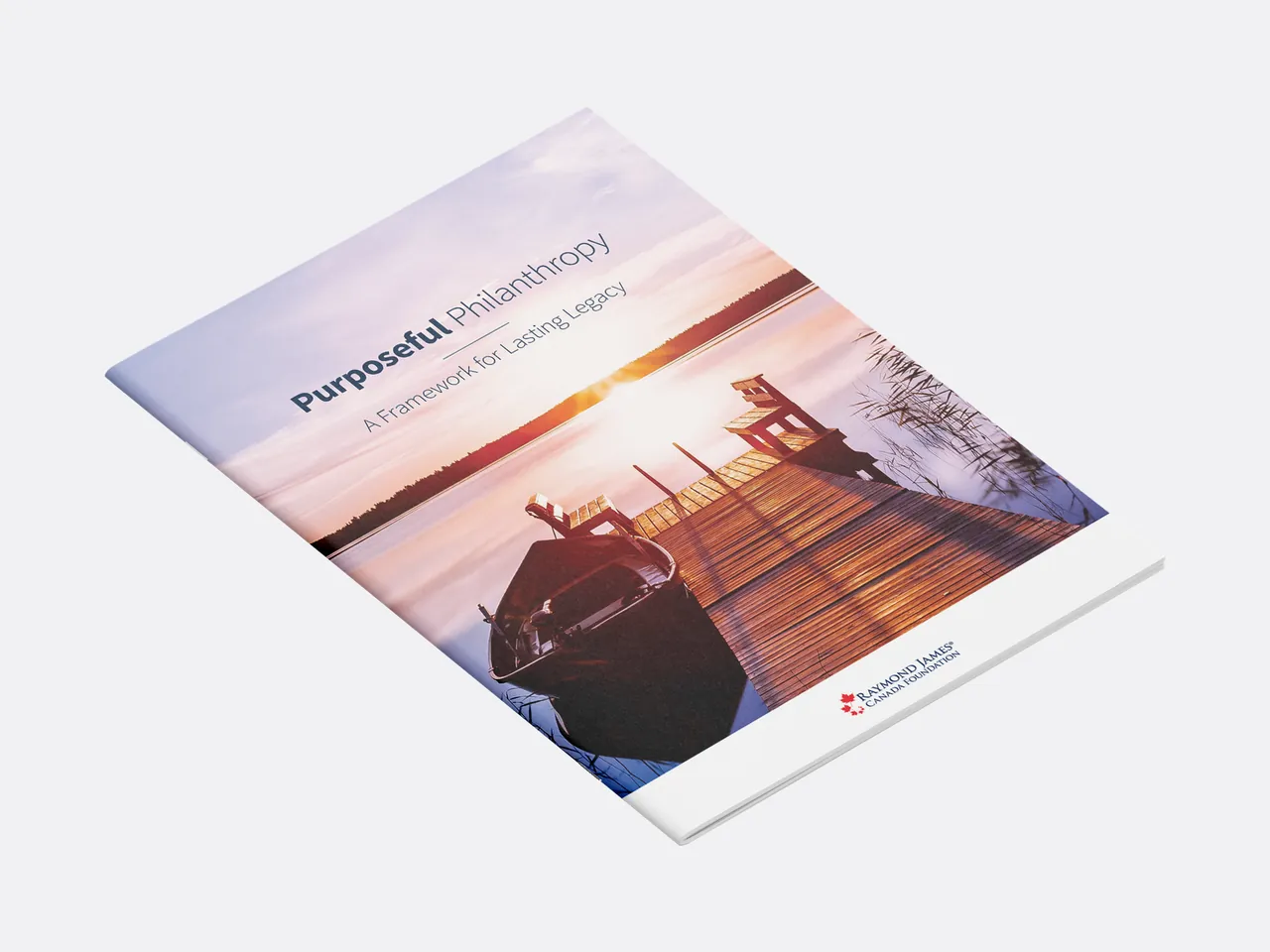
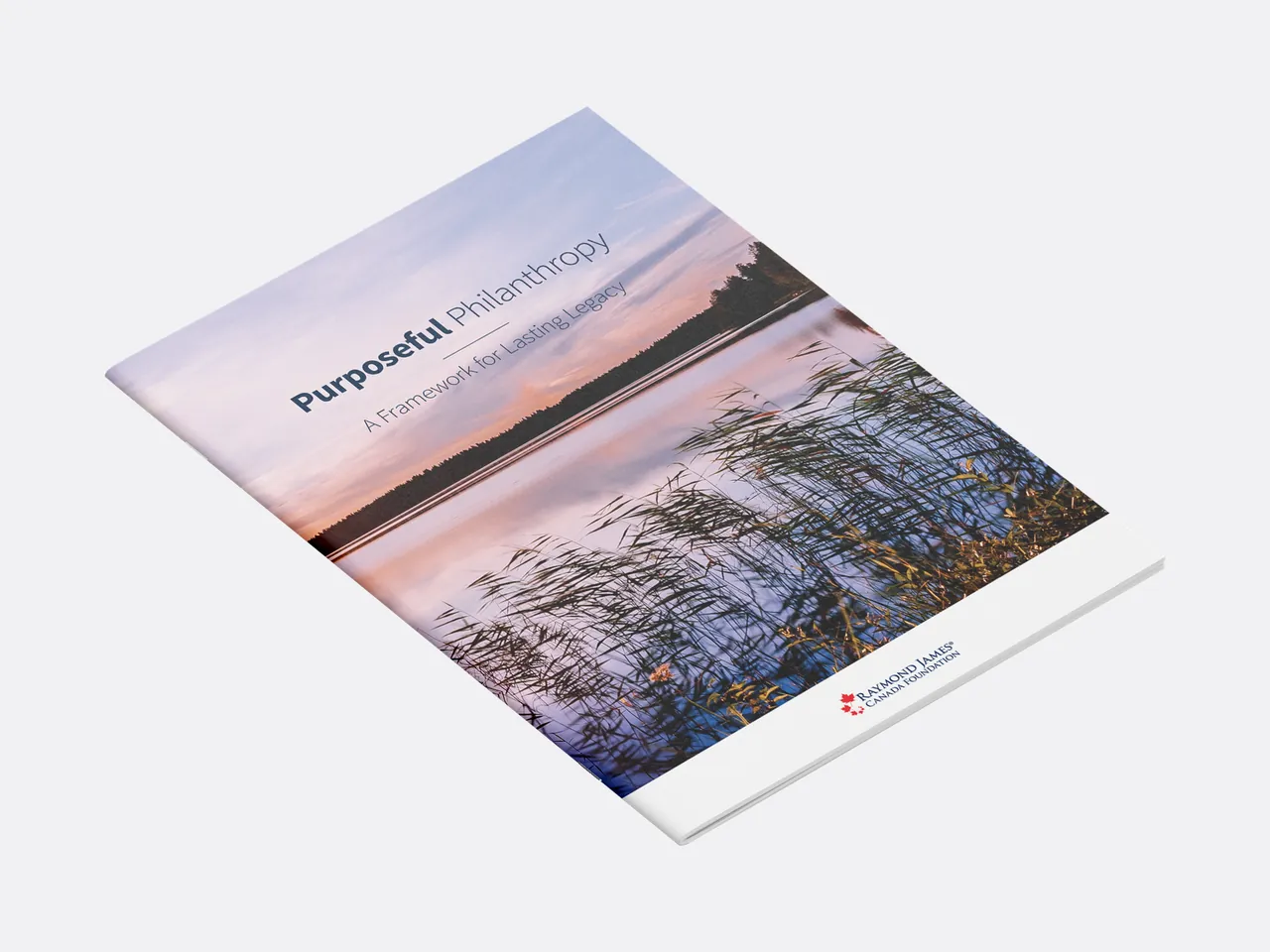
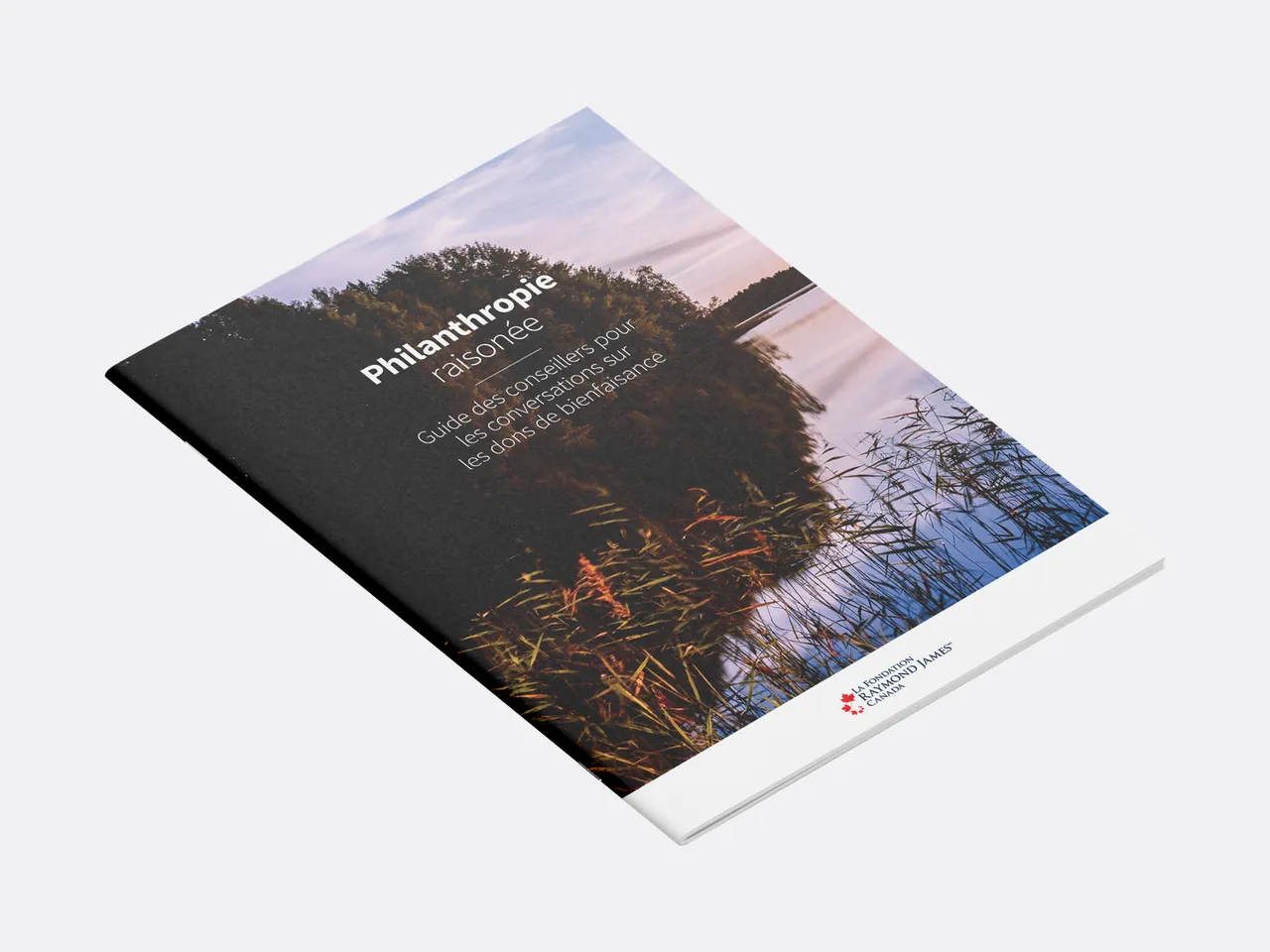
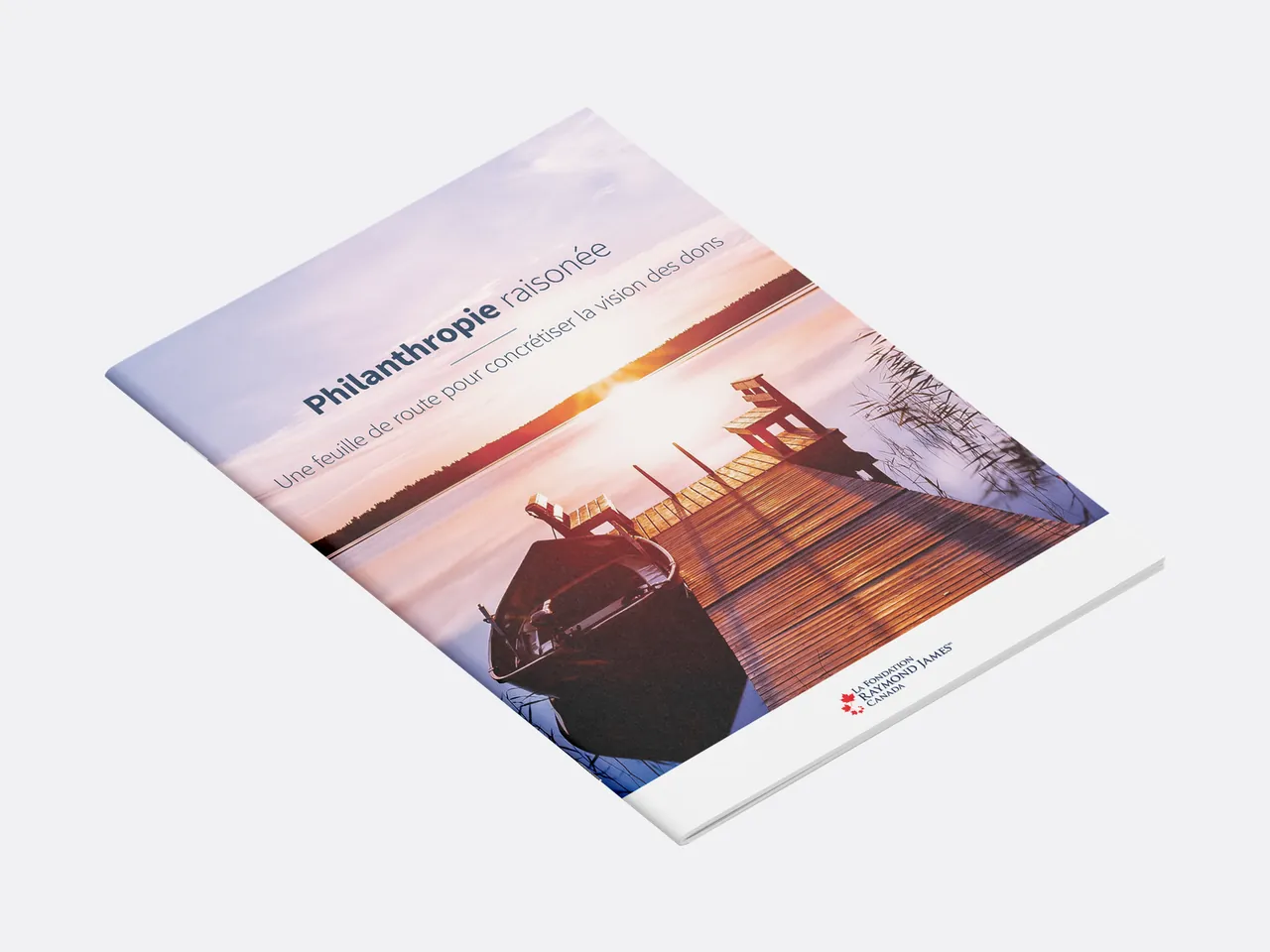
Three connected guides that help advisors start charitable conversations and help donors define a giving vision and a family legacy. 84 pages in total across English (Purposeful Philanthropy) and French (Philanthropie raisonnée).
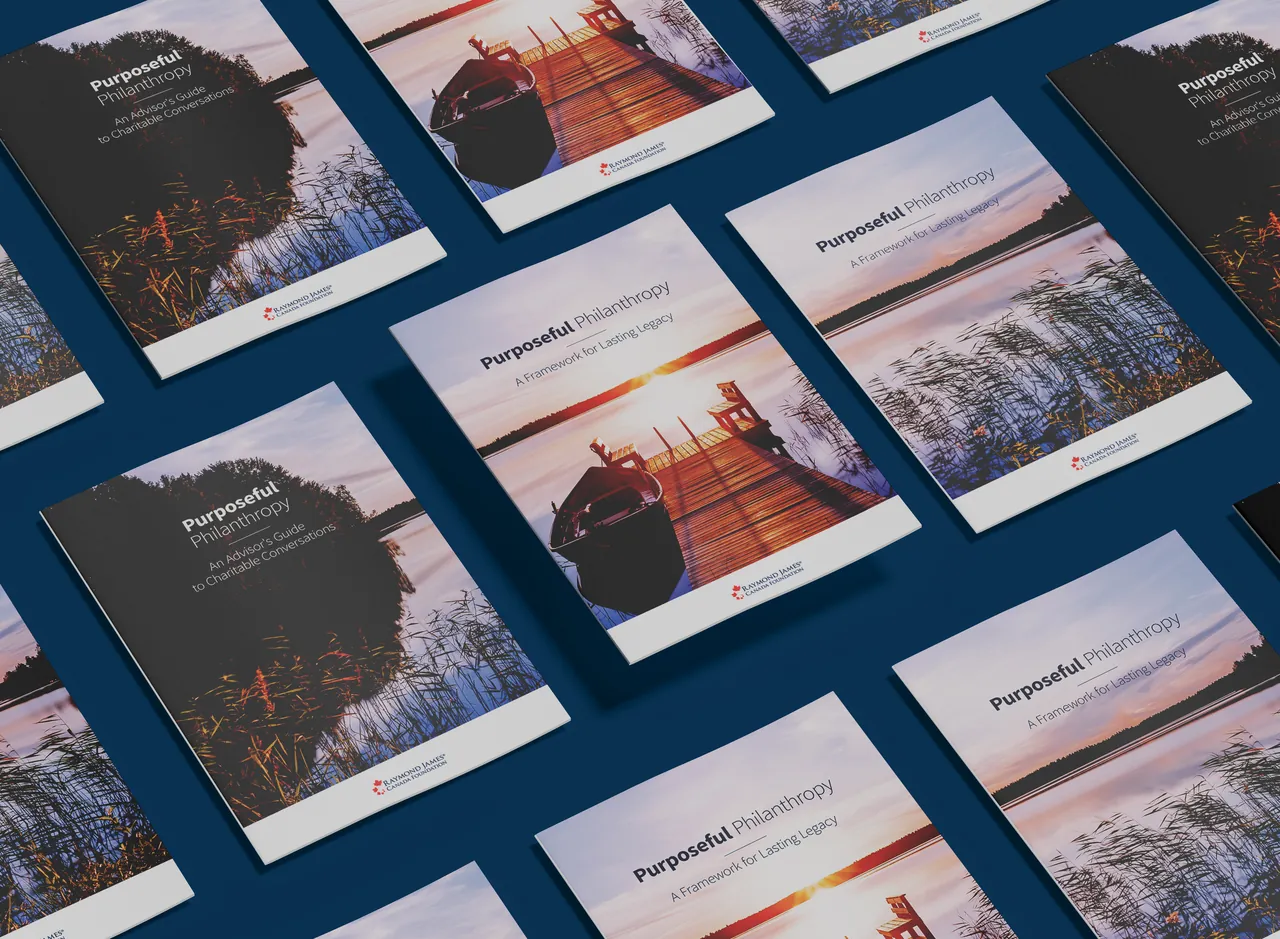
English covers
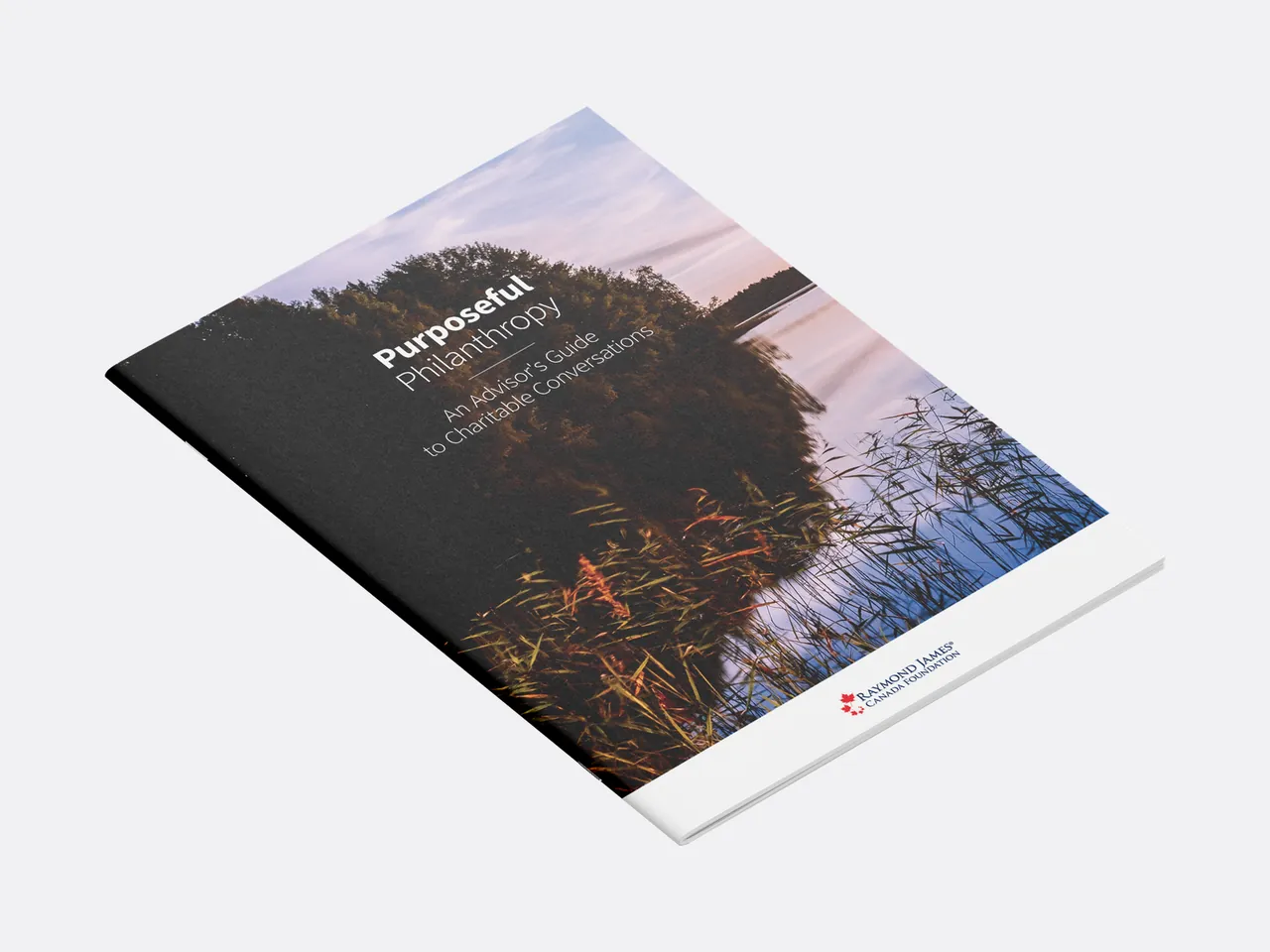
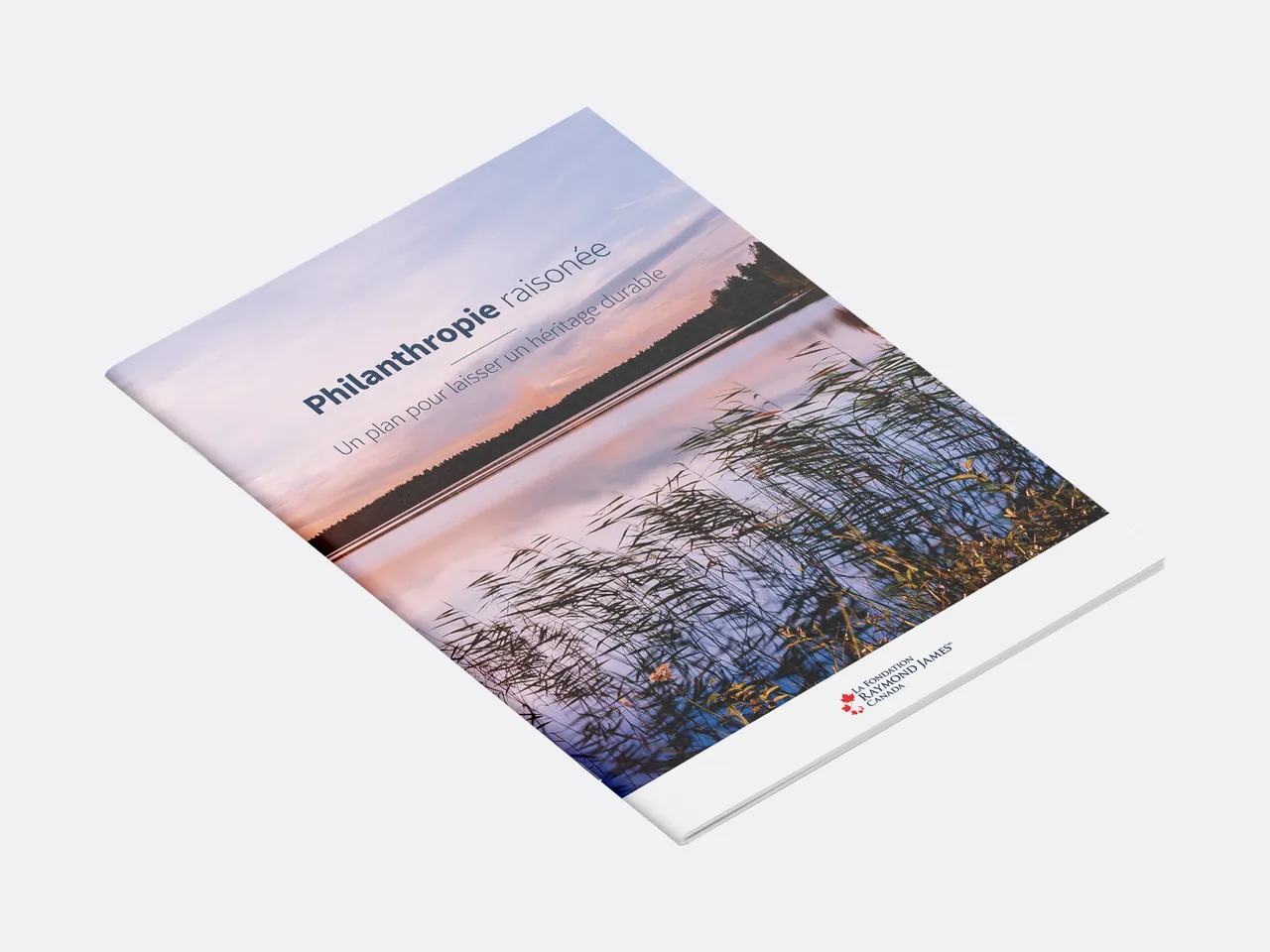
French covers
The brief
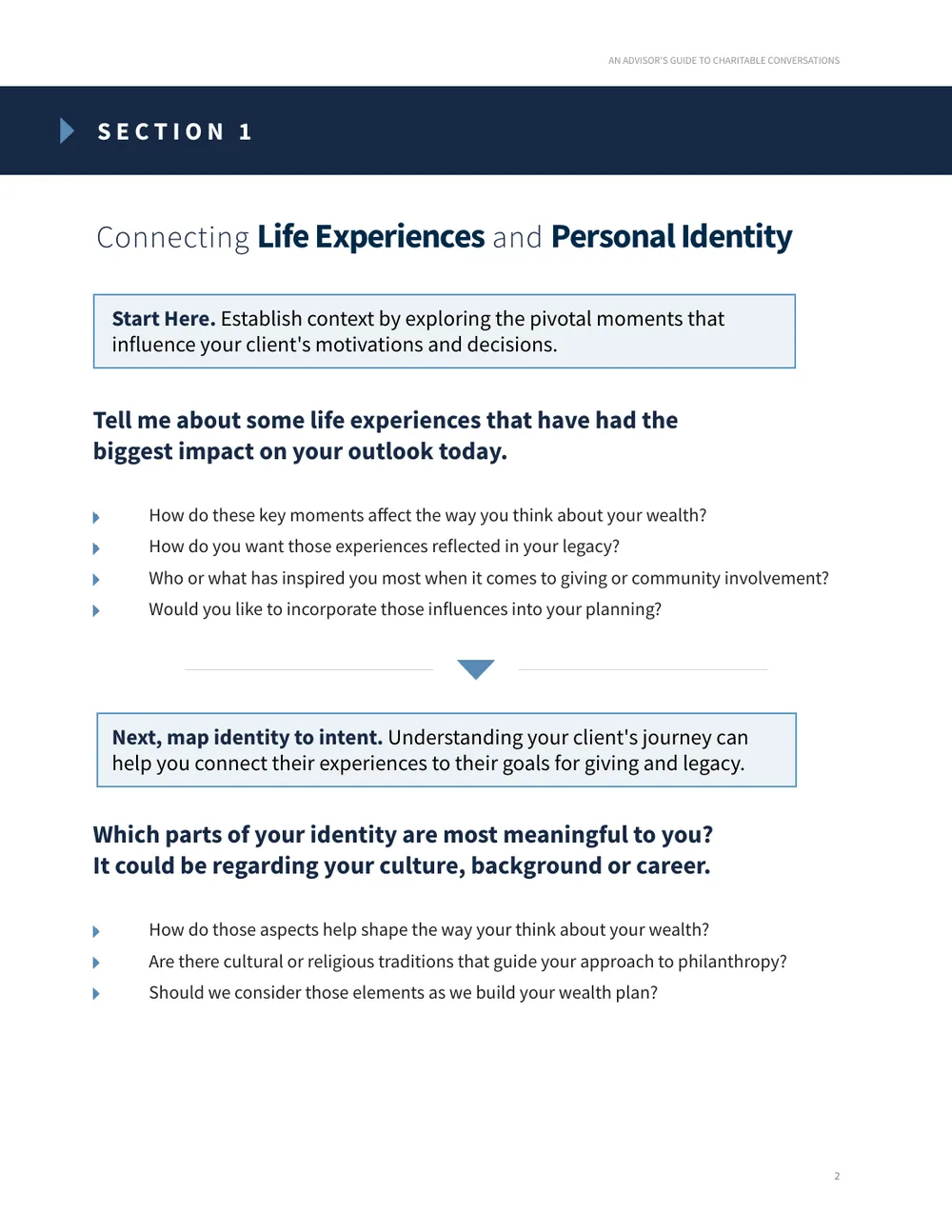
Raymond James Canada Foundation’s Charitable Giving Fund needed a guide suite that advisors could use in real client meetings: one for advisors (conversation prompts), one for donors defining their giving vision, and one for involving family and the next generation.
The challenge
Philanthropy is personal and the content is heavy with exercises: worksheets, journeys, budgets and shortlists. The suite had to feel calm and premium, make interactive pages easy to fill in, stay on brand inside a regulated industry, and exist in two languages with matching layouts, even though French runs longer.
The process
- Build one collectionSet a shared system: a calm sunset-and-water photographic cover language, a navy palette, one type family and a clean white base for the foundation lockup. Each part gets its own photograph so the three read as a set.
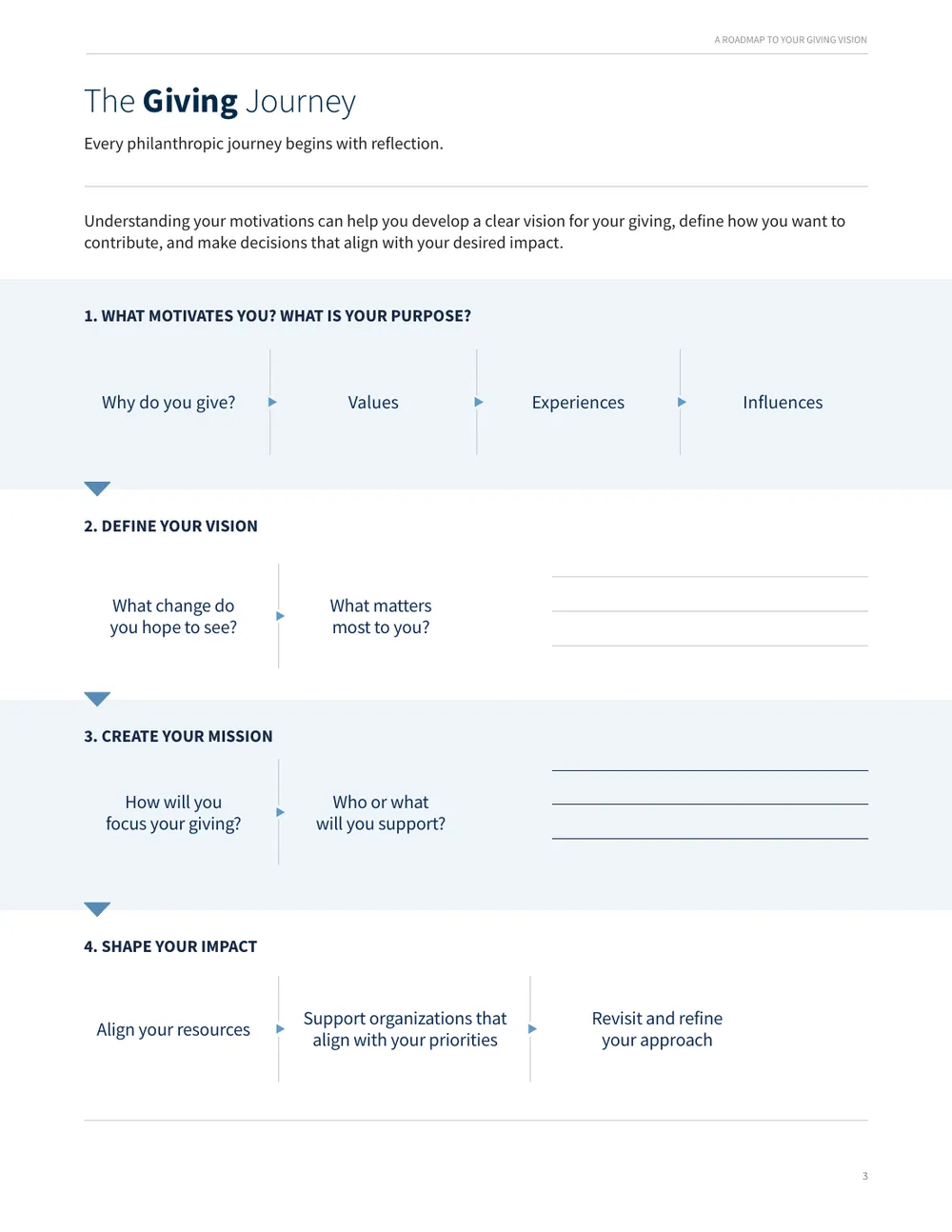
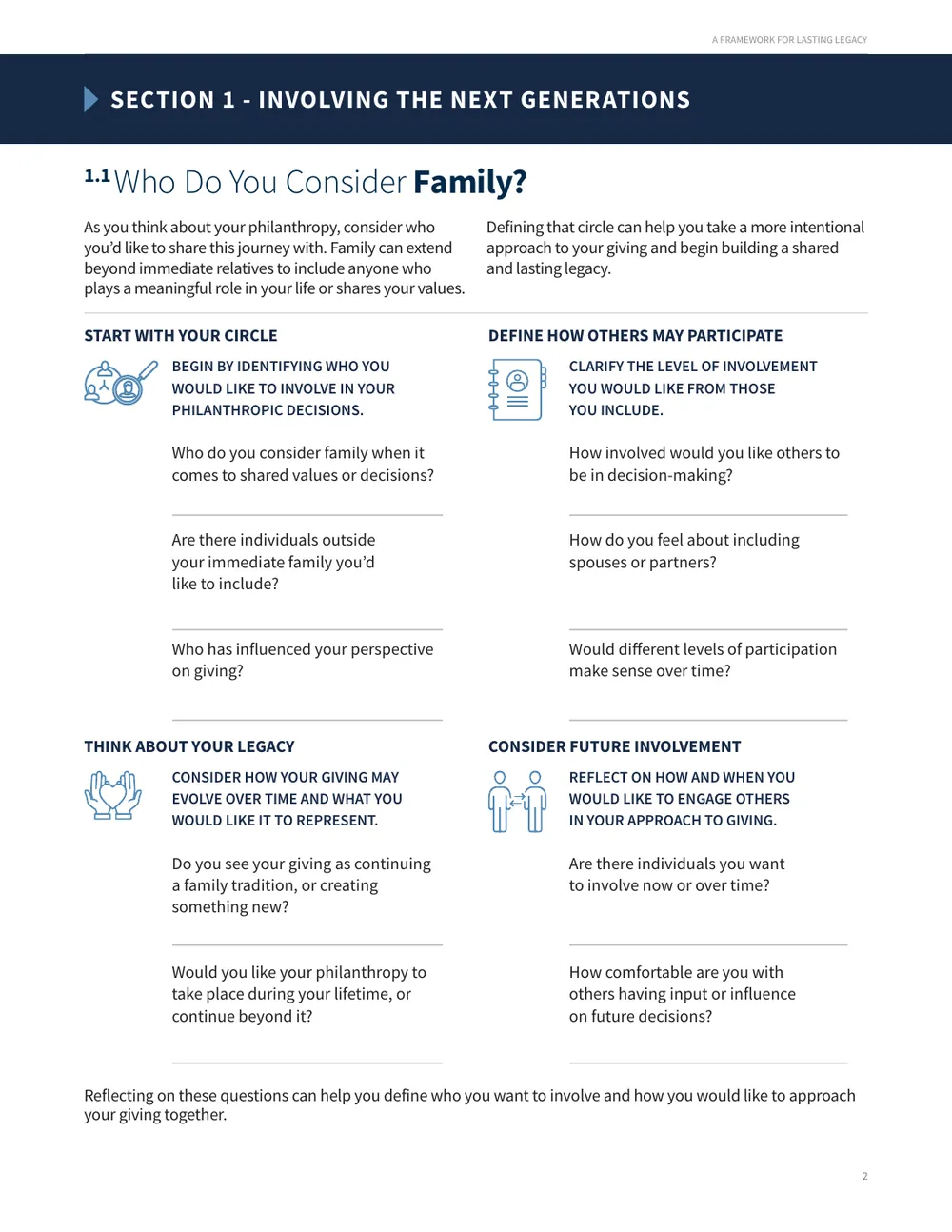
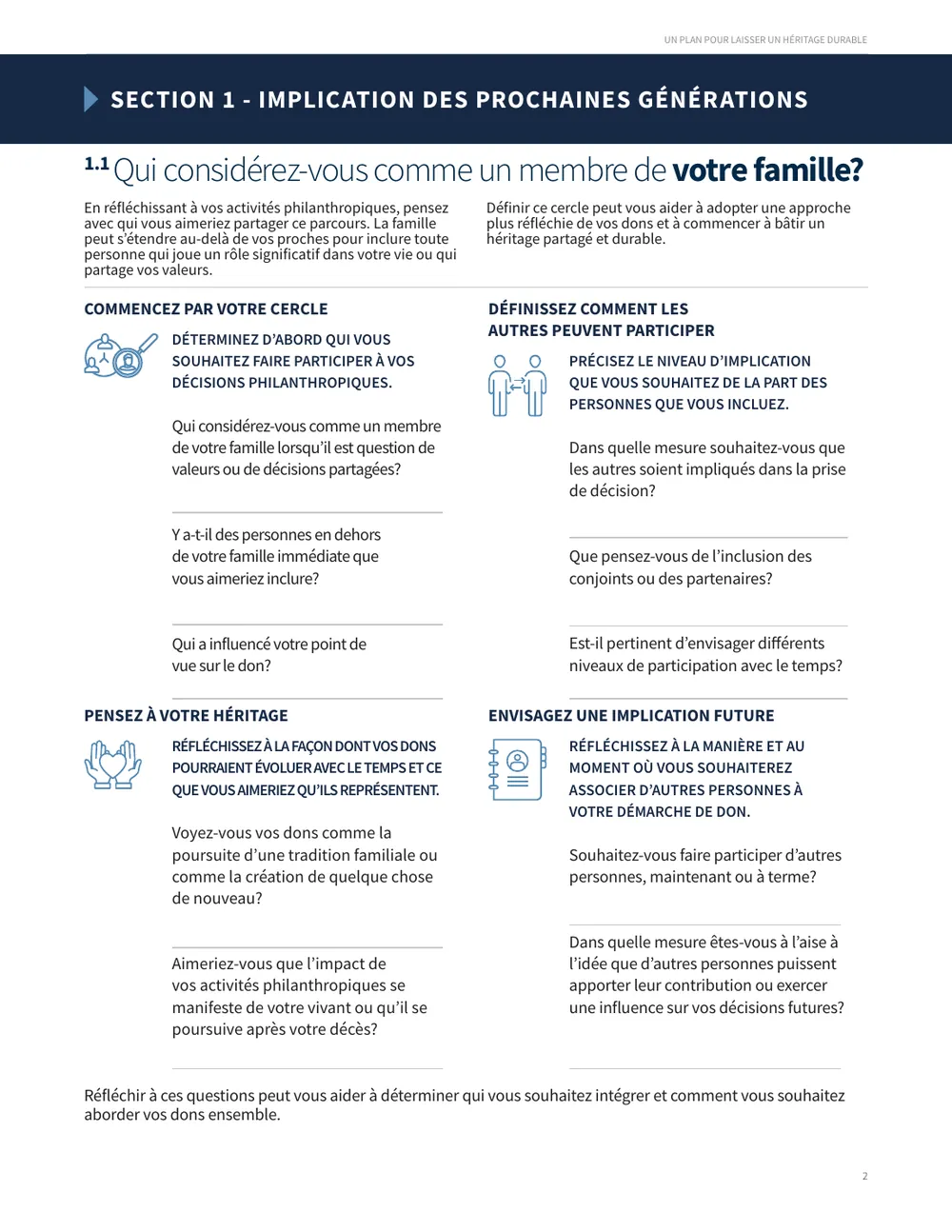
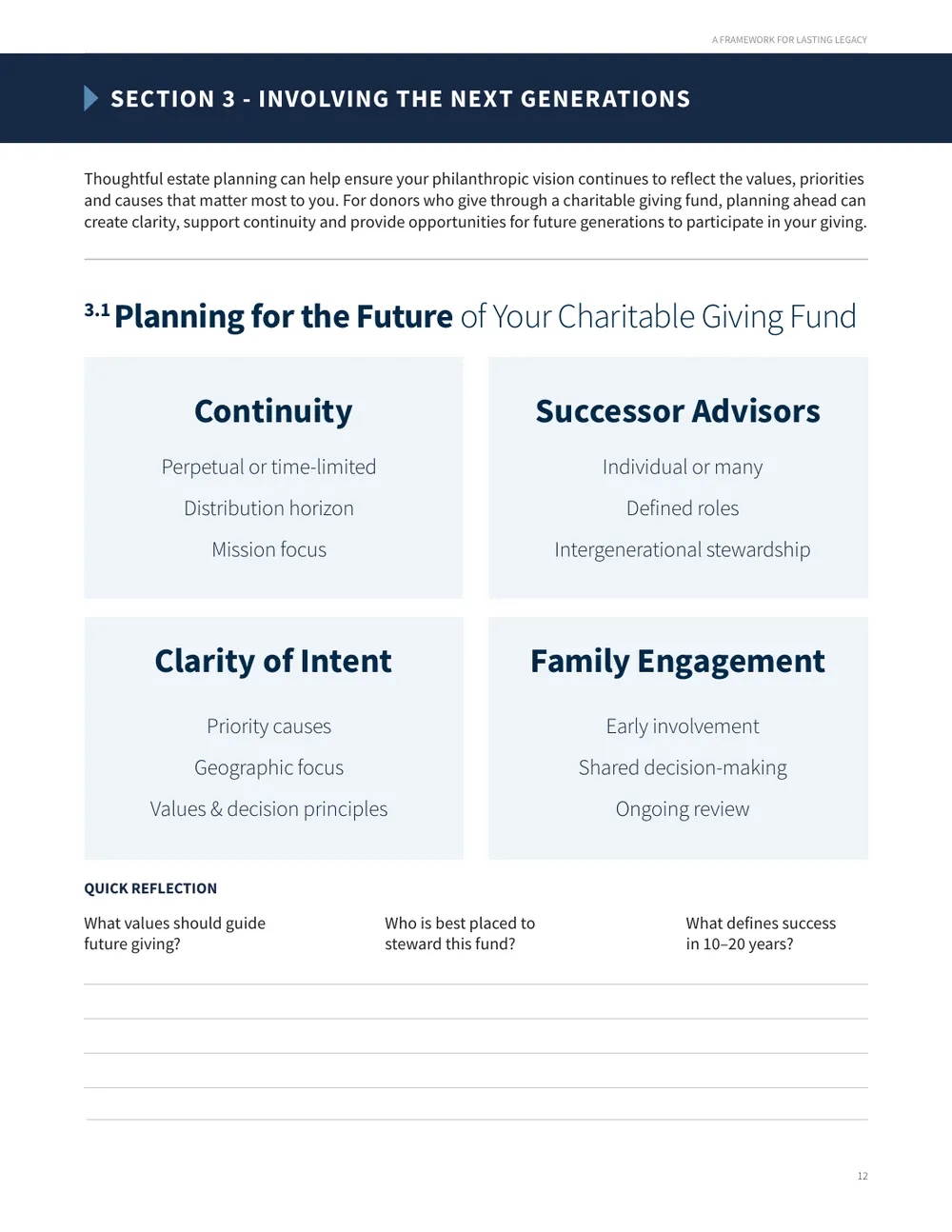
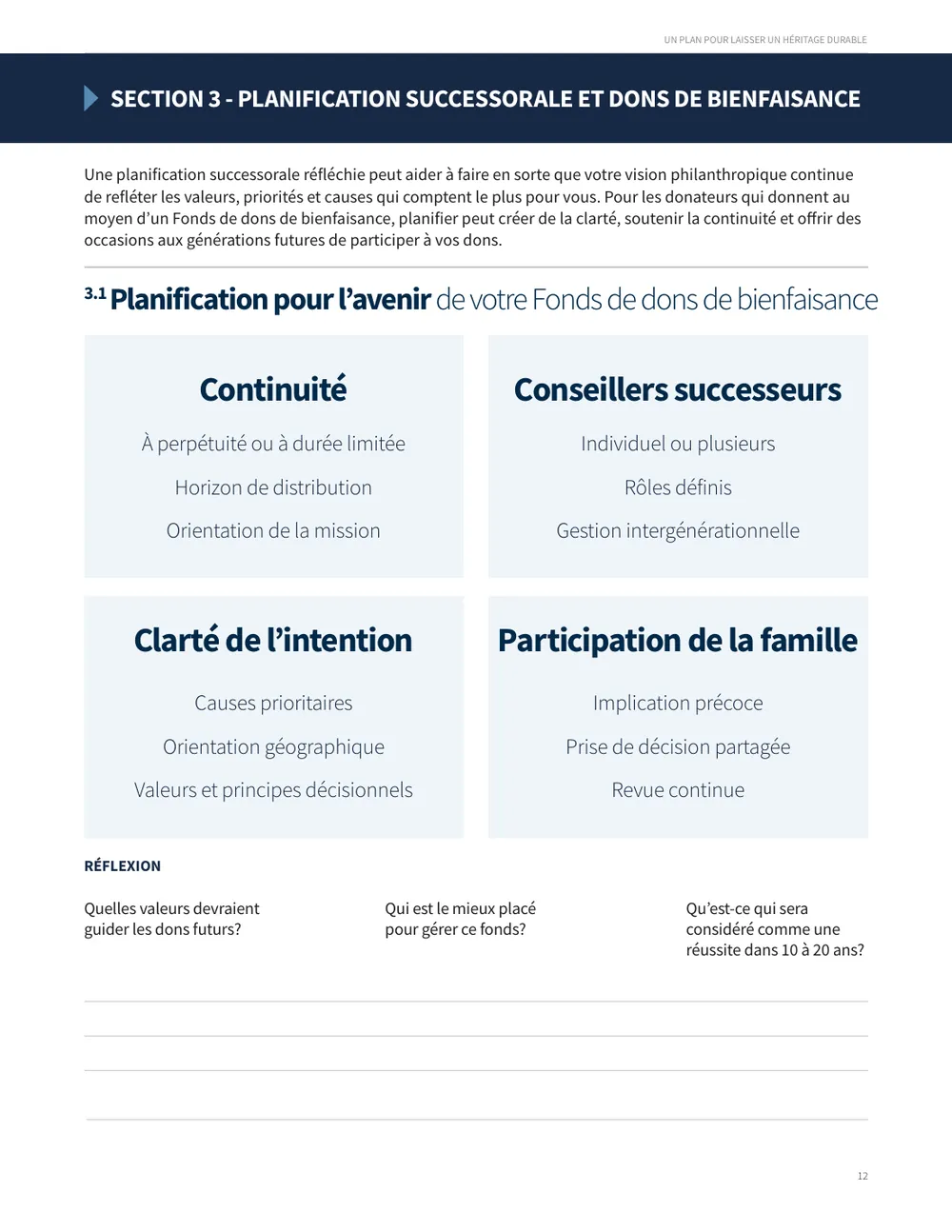
- Design the working pagesTurned questions into usable layouts: a four-step giving journey, a values mosaic, ranked focus areas, budget grids, shortlists and a family roles framework, all with room to write.
- Make the French editionsRebuilt every part in French (Philanthropie raisonnée) with matched grids and type so the two sets look identical, then produced print versions with bleed.
- Present the setCreated angled cover mockups, a tiled wall of covers and a collection graphic for each language to show the suite together.

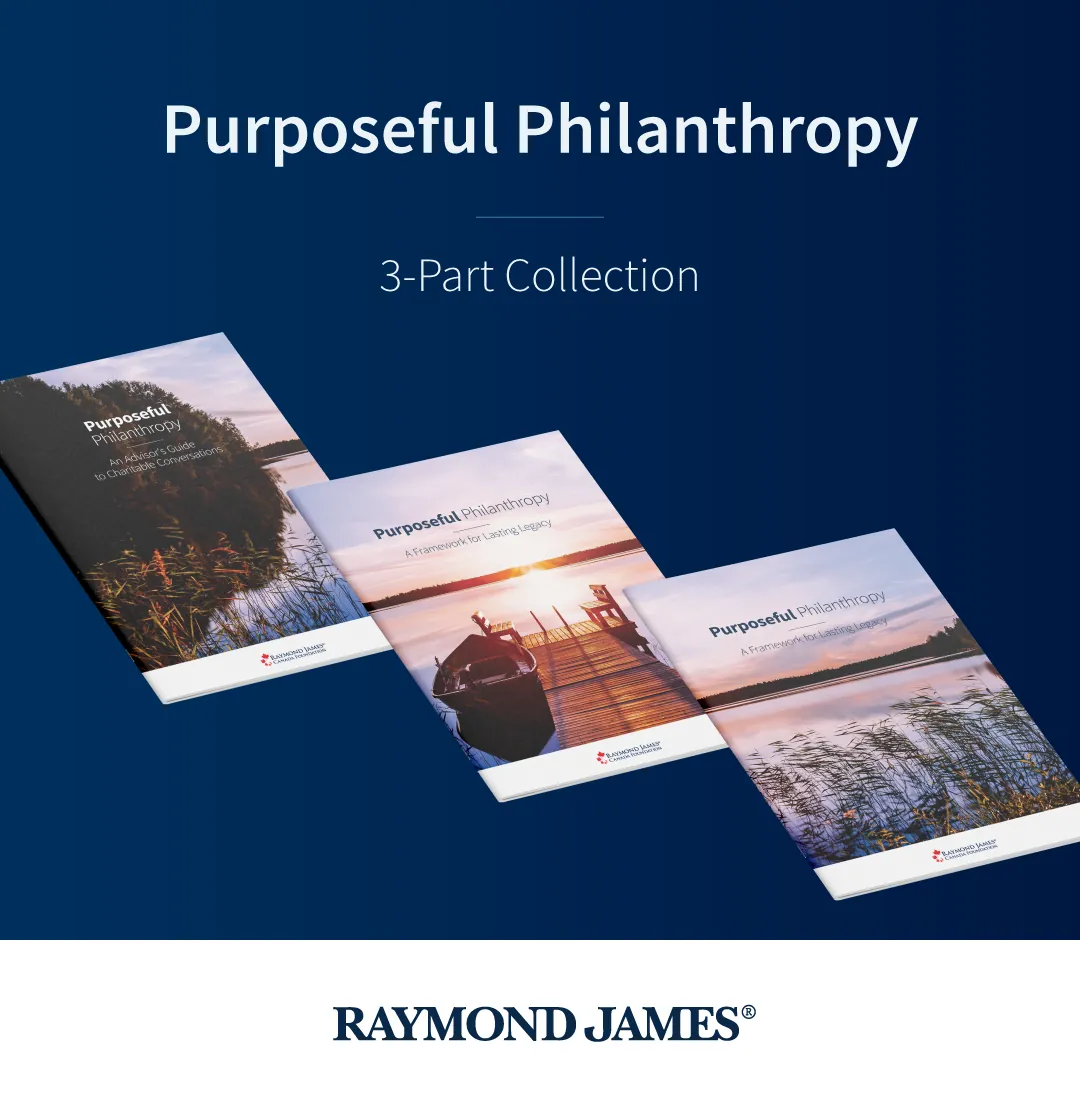
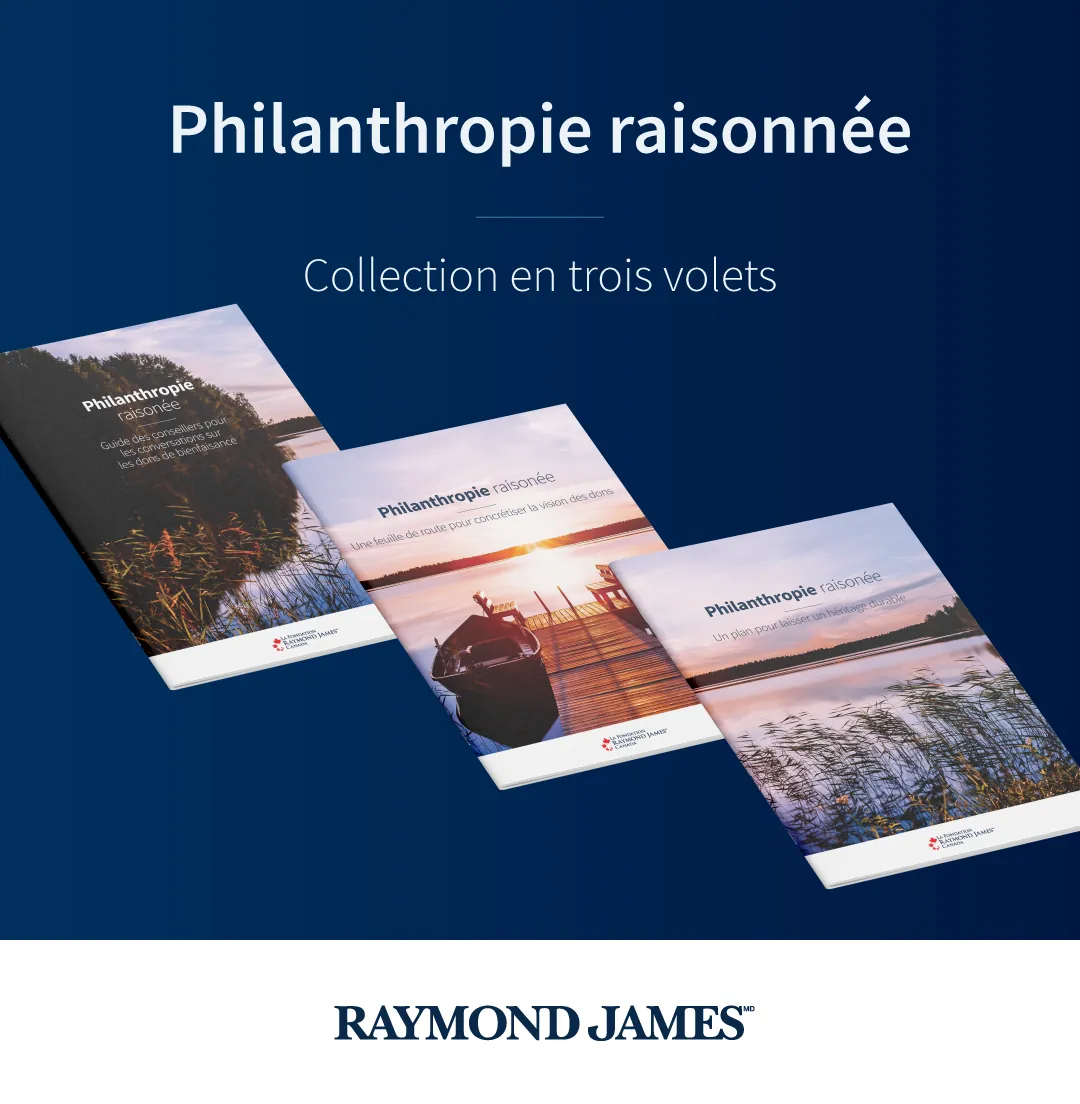
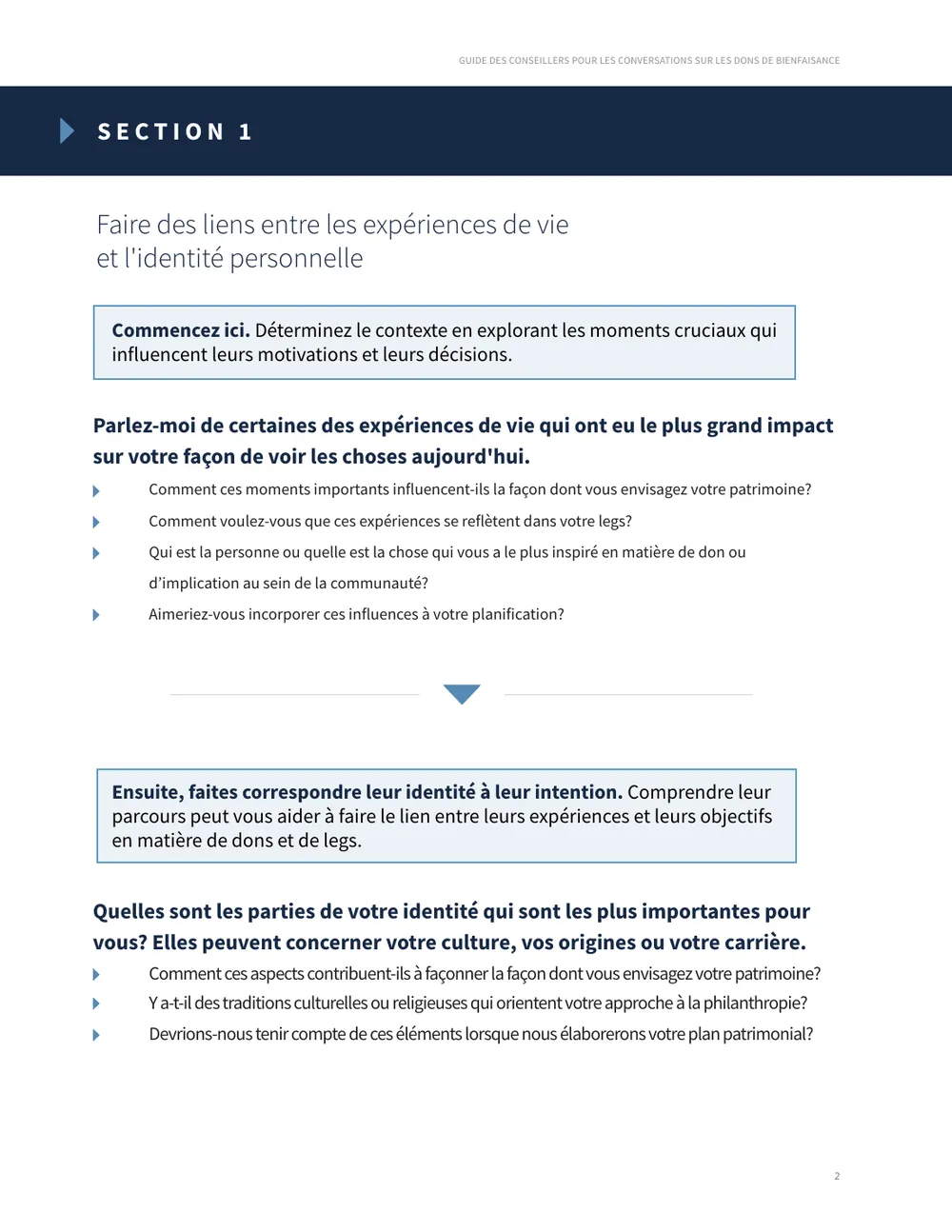
Part 1: An Advisor’s Guide to Charitable Conversations (6 pages)
Part 2: A Roadmap to Your Giving Vision (20 pages)
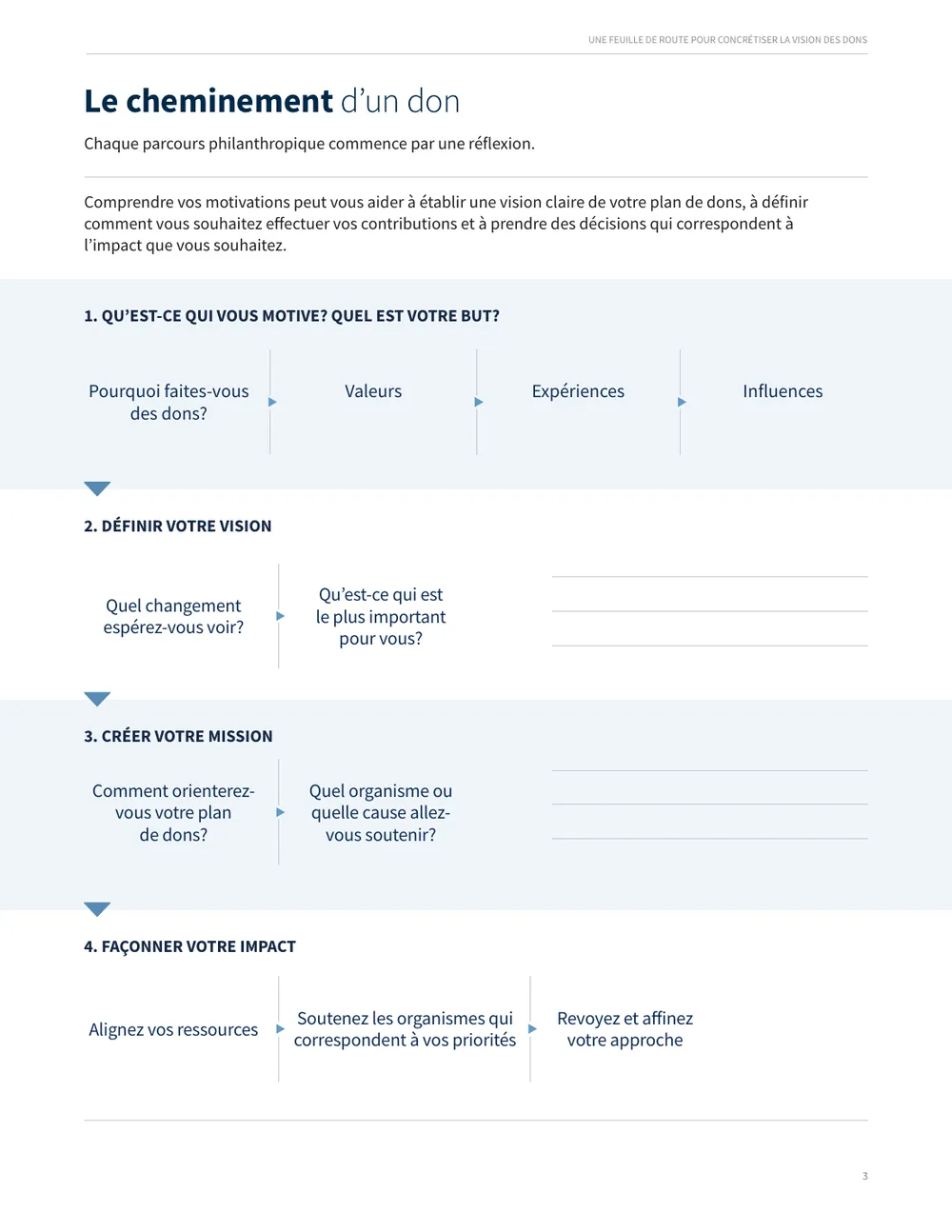
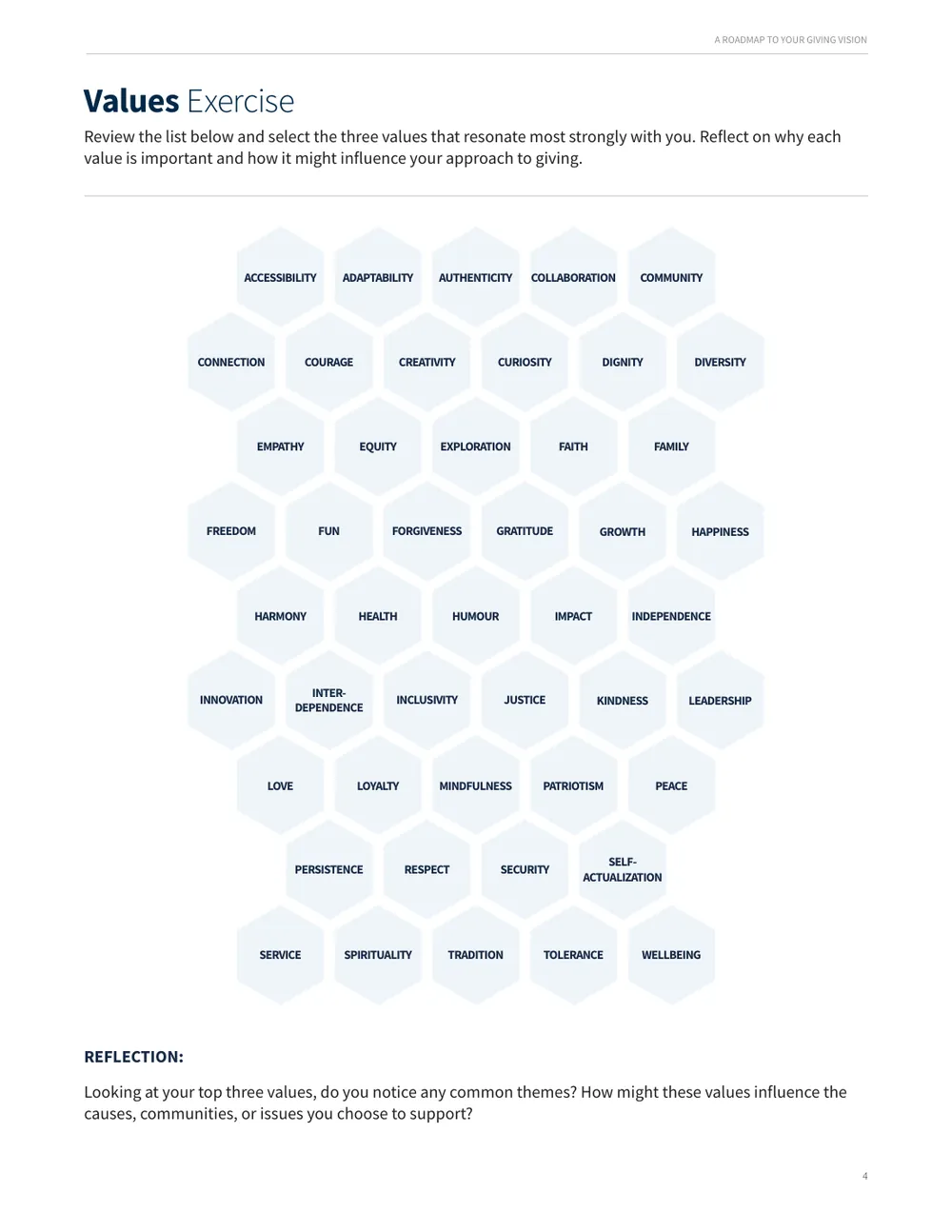
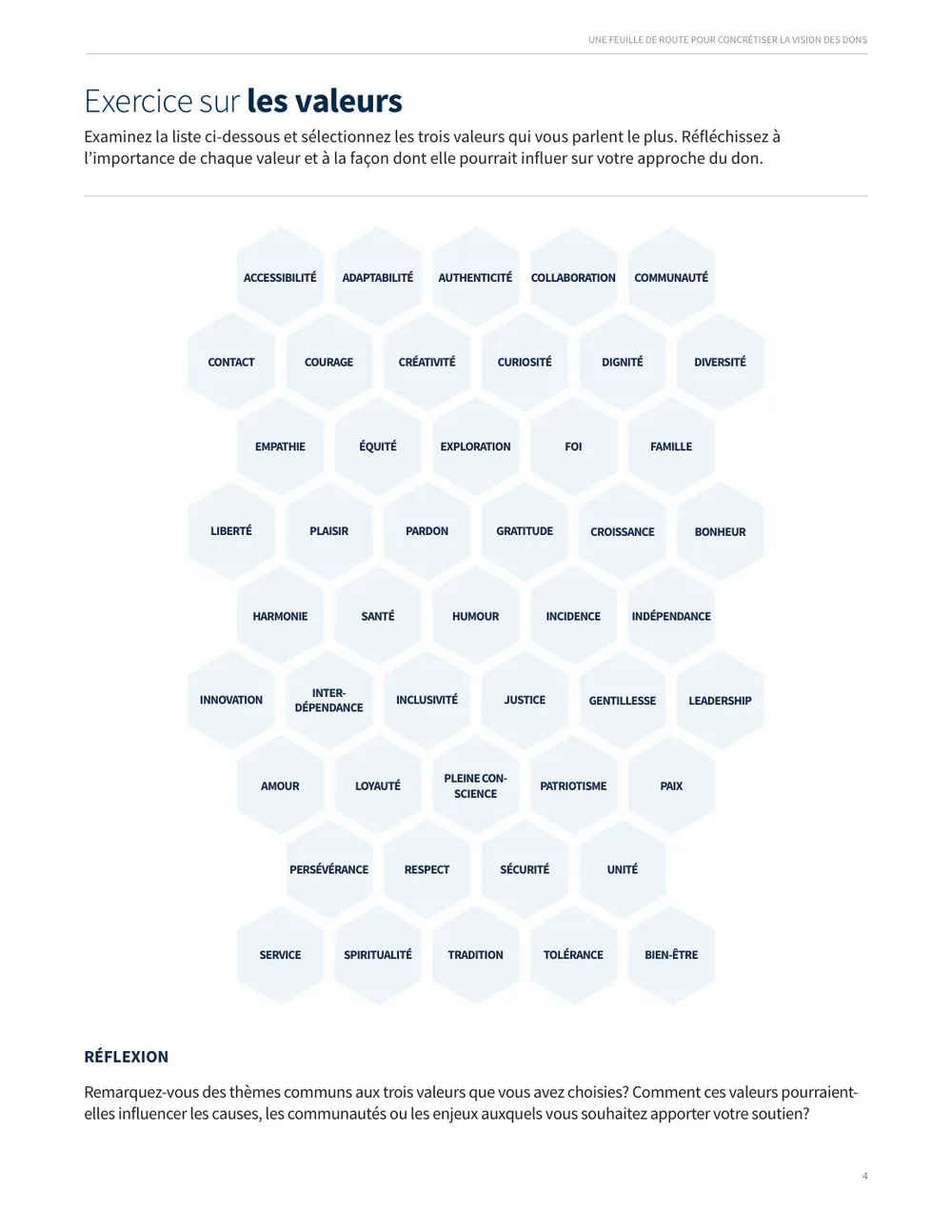
Part 3: A Framework for Lasting Legacy (16 pages)
The result
A complete, three-part, bilingual guide collection with print and web-ready PDFs.
MISSING: Austin: confirm the three-part order (Advisor’s Guide, Roadmap, Framework) is correct.
MISSING: Austin: confirm year, how the guides are used, and any real result (advisors reached, downloads).
MISSING: Austin: the Word drafts contain unfinished designer notes, so no copy from them was used. Please confirm the descriptions above.
MISSING: Austin: the brief, challenge and process on this page are drafted from the work and your resume. Please correct or add detail.